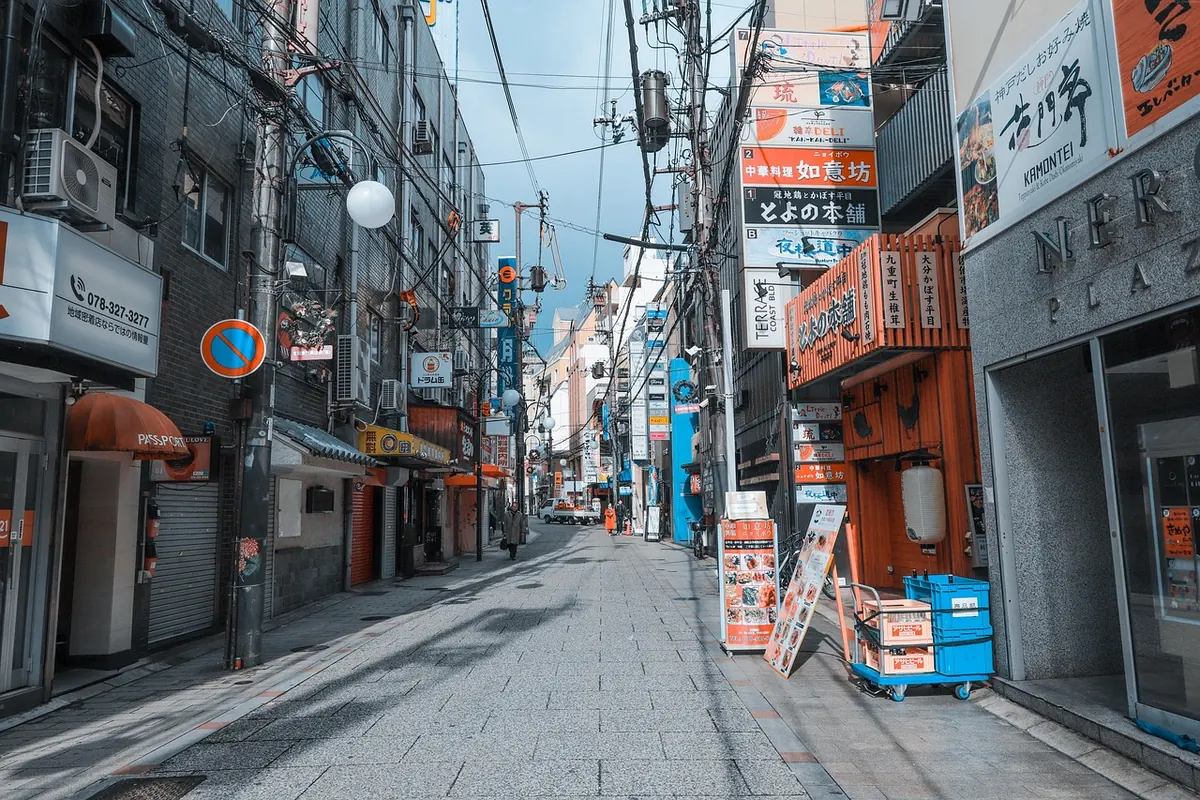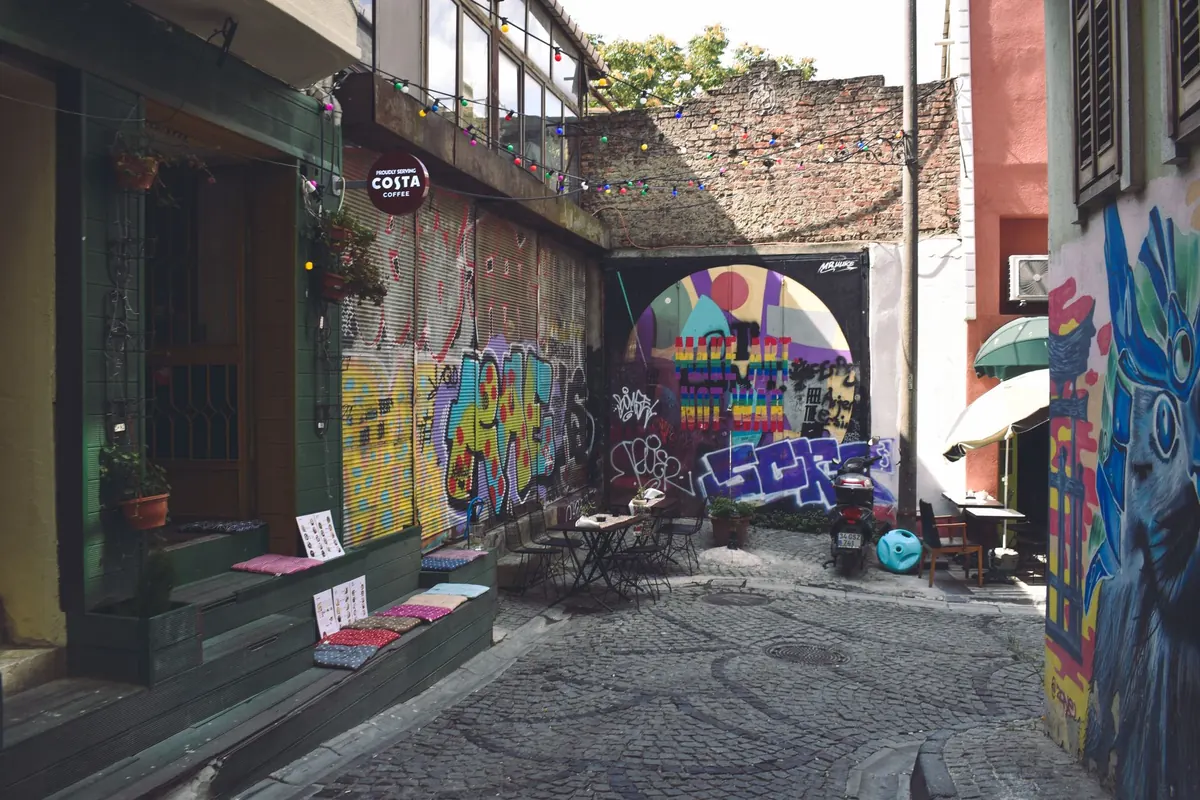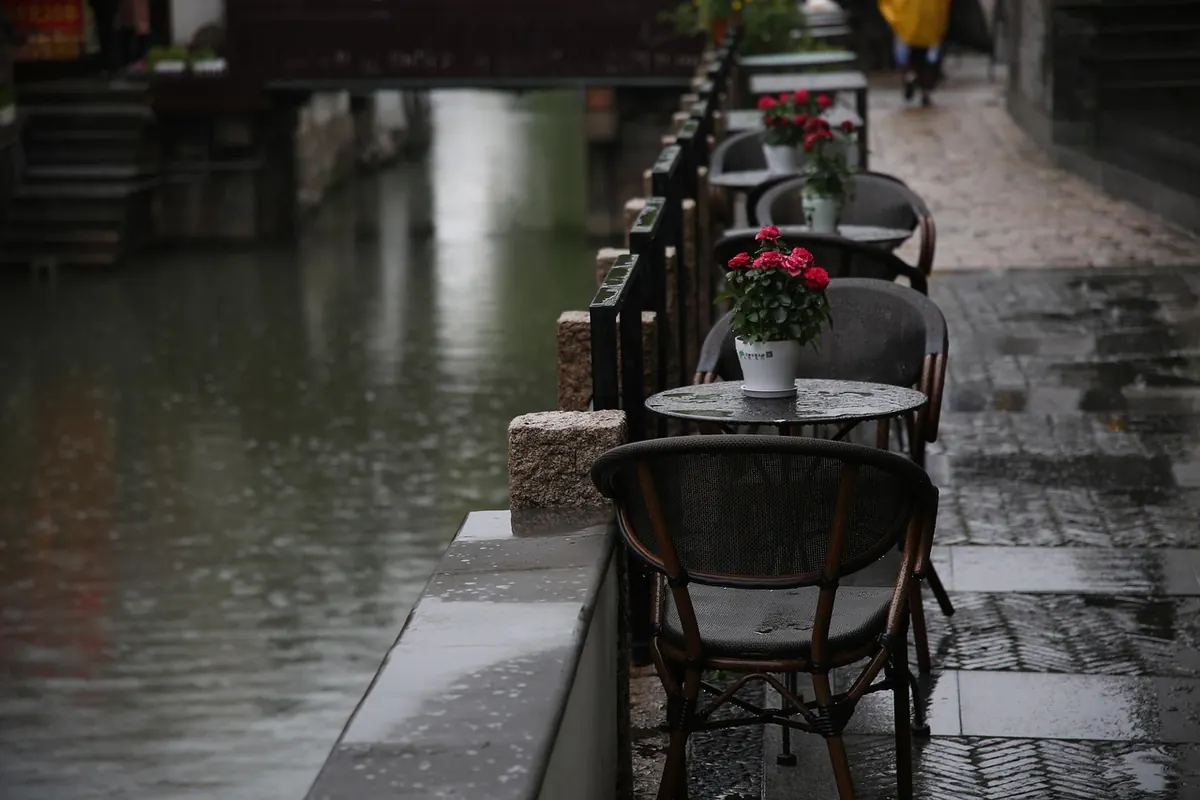
Rain changes the arithmetic of a city. Colours deepen, the pavement becomes a second sky, and everyone walks with their shoulders pulled in and their umbrellas up — which is precisely when the street starts looking like itself. It is also the moment most people put the camera away. That trade-off is worth refusing. Wet streets are among the most generous subjects in urban photography, and a modest amount of preparation buys you hours of shooting without a single anxious check of the lens mount.
Read the Weather Like a Street Photographer
A forecast percentage tells you almost nothing useful. What matters is the shape of the rain: when it starts, when it stops, and how hard it comes down. Steady drizzle is generous — it keeps surfaces glossy and people moving without driving them indoors. A heavy downpour is a different assignment: shelter, doorways, steam, and the strange quiet that follows. The best window is usually the twenty or thirty minutes after a shower passes through, when the streets are soaked, the sky is still textured, and the light has that soft, slightly silvered quality that flatters wet stone.
Wind decides whether you get reflections at all. A breezy day ripples every puddle and turns your mirror into a wash of grey. On a still evening, a two-centimetre puddle on dark asphalt can hold an entire building. Check the radar loop rather than the icon: a band of showers with gaps in it is better than an all-day washout, because the gaps let light through.
Time of day matters more in rain than in sun. Midday grey flattens everything into the same low contrast. Dusk, early evening, and the hour when shop windows and headlights take over are far kinder — the wet ground picks up every light source and bounces it back at you.
Protecting the Camera Without Mummifying It
You do not need a waterproof housing. You need to keep water off the front element and out of the seams, and you need to be able to work quickly. A dedicated rain cover is convenient, but a clear plastic bag with a rubber band around the lens hood does the same job for nothing. Cut a hole just large enough for the hood, tape the edges, and you have a sleeve that lets you zoom and fire while the body stays dry.
Two habits save most cameras. First, the camera comes out of the bag only when you are actually shooting, and goes back in the moment you stop. Second, you never change lenses outdoors in rain. Pick one focal length before you leave — 35mm or 50mm on a full frame, the equivalent elsewhere — and commit. If you must carry two, carry two bodies rather than doing surgery in a doorway.
Water on the front element is the most common cause of soft, milky frames that look fine on the back screen and awful later. Keep one cloth in a zipped pocket, dry, and use it only for glass. A second cloth can be damp and used for the body. Wipe in one direction, not in circles, and check the hood for droplets before every few frames.
The kit that actually earns its place
- A rain sleeve, or a plastic bag and a rubber band
- A lens hood, always mounted, plus a clear filter to take the spray and the scratches
- Two microfiber cloths: one dry for glass, one for everything else
- A small towel in the bag for hands and the camera body before packing
- A dry bag or a handful of silica packets to absorb what you cannot wipe
- A spare battery, kept warm in an inside pocket
- A folded plastic bag to kneel on at puddle level
Find Water That Works as a Mirror
Not every puddle is a photograph. The useful ones are shallow, still, and sitting on a dark, smooth surface — fresh asphalt, polished paving, granite, the sheltered side of a building. Water gathering near a drain is usually moving and broken up. Water on a slope is running. Walk a block and look down; the good ones announce themselves as a clean rectangle of sky in the middle of the footpath.
Then get low. Really low. Most reflection shots fail because the photographer stayed at standing height and caught the water at a shallow, smeared angle. Crouch, kneel, or put the camera a hand's width off the ground and use the tilting screen. Compose so the reflection is not a decorative footnote but the subject, and leave one solid, real object in the frame — a bollard, a tyre, the base of a lamp post — to anchor the image and keep it from floating.
Focus deliberately. If the reflection is what you care about, focus on it and let the physical world go soft; if you want both, stop down and accept a slower shutter, which is fine for still water. And watch your own silhouette: at puddle level you are often standing in the frame you are trying to make.
Umbrellas, Corners and Other People's Routines
Wet-weather crowds are predictable in a way that dry crowds are not. People follow canopies, awnings, station entrances and crossings. They move faster, they hold their umbrellas at consistent angles, and they bunch at corners waiting for the light. Find a corner with backlight — a bright shopfront, a bus headlight, a lit sign — and let people walk through it as silhouettes. The umbrella becomes a shape, the stride becomes a graphic, and nobody needs to look at the camera.
Shutter speed decides the mood. Around 1/250 freezes a walking stride and keeps the umbrella crisp. Drop to 1/30 or slower and the crowd smears into a ribbon of colour while the buildings stay put. Both work; try not to land in the awkward middle.
Manners matter more in rain, because people are already uncomfortable. Do not stand in the middle of a pavement, block a doorway, or plant yourself at the top of station steps. Stay out of cycle lanes. If someone is struggling with a pram or a wet dog, let them pass and wait. And if you are close enough that a person has clearly noticed you, a nod and a raised hand go further than pretending to photograph the sky. Some of the best frames come from simply standing still and letting the street arrange itself around you.
Settings for Flat, Grey Light
Shoot raw. Rainy scenes have a narrow tonal range and you will want the room to pull contrast back later. Expose for the brightest thing that matters — a lit sign, a headlight, a white shopfront — and let the shadows sit; blown highlights in wet streets look like holes. A third of a stop to a full stop of positive exposure compensation is often right when the frame is mostly bright sky.
Auto white balance tends to go cool in rain. Sometimes that is exactly the mood you want, so leave it. Otherwise warm the image slightly and let the wet surfaces carry a little amber. Because contrast is low, composition has to do the work: strong verticals, hard diagonals from the pavement, one clear subject. Use single-point autofocus with continuous tracking, keep the ISO high enough to hold 1/125 or faster for anything moving, and shoot short bursts on a crossing rather than a long spray.
Back Home: Dry It, Don't Bake It
A wet camera left in a wet bag overnight is how seals fail and fungus starts. Unpack immediately. Take out the card, wipe the body and hood, extend the lens indoors, and leave everything to air in a dry room with a few silica packets — not on a radiator, not near a boiler, never with a hair dryer. If you walk from cold rain into a warm café, condensation will fog the glass before you can shoot; put the camera inside a zipped bag before you go in and let it reach room temperature slowly. Rinse your cloths, and keep the dry one dry.
A Short Checklist for the Doorstep
- Hood on, clear filter on, one lens chosen
- Camera in the bag until the first frame
- Dry cloth in a zipped pocket, towel in the bag
- Battery warm, spare card in a sealed pocket
- Radar checked, and a plan for the twenty minutes after the shower
- One corner, one awning, one crossing identified before you arrive
Rain rewards patience more than gear. The streets are already doing something interesting; your job is to stay dry enough to keep watching, low enough to see the mirror under your feet, and polite enough that the people walking past never have to think about you. Then wait for the light to come through the gap in the showers.
Photo: pyou93 / Pixabay