Two markets can sit four streets apart and describe the same neighborhood in completely different languages. One tells you what people kept for thirty years and finally let go of; the other tells you what the soil nearby is doing this month. If you are researching a place — its incomes, its migrations, its labor, its tastes — visiting both in the same week gives you more than either could alone. The work is in knowing what each one is actually reporting, and in behaving like a regular rather than a spectator with a notebook.
Two Different Kinds of Evidence
A flea market is an assembly of leftovers. Its inventory arrives by house clearance, estate sale, job lot, and shipping container, which means what sits on the tables is a record of domestic life: kitchenware, hand tools, linens, records, furniture, children's clothes in sizes that stopped being made decades ago. When you see the same object at nine stalls, that is not a coincidence — it is a wholesale channel. When you see one stall of matching china from a single household, that is a death, a downsizing, or a divorce, and the vendor probably knows which.
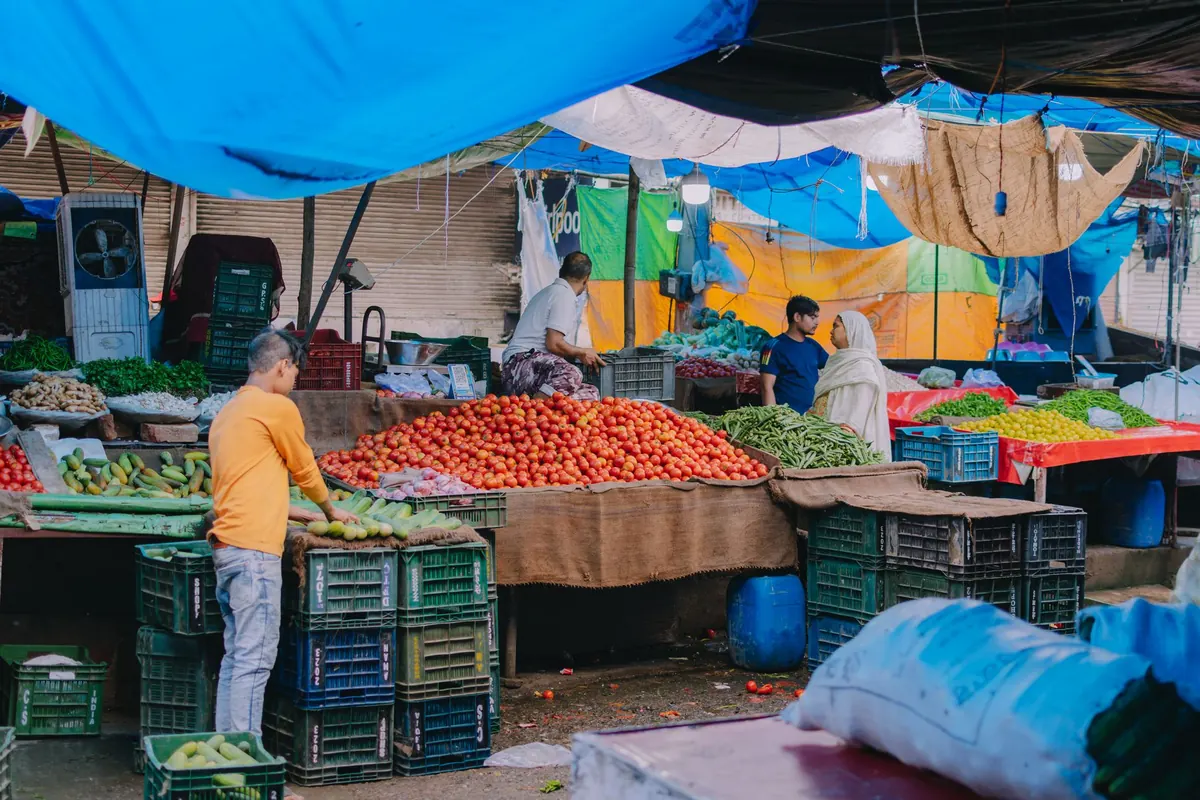
A farmers market is bounded by season and distance. A stall carrying forty items in late summer and six in February is telling you about a growing region and a short supply chain, not about consumer demand. The person behind the table is the primary evidence: crates with a farm name scrawled on them, dirt on the roots, uneven sizes, a van parked around the corner with the back doors open. Flea markets answer who lives here and what did they own. Farmers markets answer what does this land and this labor produce, and who can still afford to buy it.
Reading the Tables
Spend your first twenty minutes walking without buying anything. Look at the systems underneath the goods — those tell you more than the objects do.
- Price tags. Handwritten stickers, crossed-out numbers, reused bits of masking tape: an individual seller with room to move. Laminated printed cards and a card reader: a reseller or a stall with a system and a fixed margin.
- Signage. A handwritten "please don't handle the glassware" tells you about breakage and trust. A printed "no photographs" tells you the stall has been treated as scenery before, and is tired of it.
- Languages between vendors. Not what is spoken to customers — what is shouted across the aisle at seven in the morning. That is the trade network, and it rarely matches the language of the neighborhood's front rooms.
- Volume and repetition. One household's worth of goods looks like a life. Twenty households' worth looks like a warehouse. Both are interesting, for opposite reasons.
- Farm evidence. A single grower will show you odd sizes, dirt, and a short list. A reseller shows you uniform produce, all year, in crates with no names on them. Several stalls with identical tomatoes are usually buying from the same wholesaler.
- What is absent. No bread, no fish, no cheese, no one under thirty. Absence is data, and it is the easiest thing to forget to write down.
Time, Weather, and the Shape of the Day
The same market at eight in the morning and at one in the afternoon are two different institutions. Flea markets open early for dealers with torches and firm prices; by the last hour the vendors are tired, the good objects are gone, and a bundle deal is possible. Farmers markets invert this slightly: the first hour has the choice, the final half hour has the markdowns and the boxes, and the vendors finally have time to talk.
Weather edits the cast. Rain keeps the casual browsers away and brings out the people who are actually trading, which makes for better conversation and worse photographs. Weekday markets tend to serve the neighborhood; Saturday markets tend to serve the city. In a tourist district, watch how quickly a market that was for locals becomes a performance of itself — the same goods, different prices, and a sudden supply of small souvenir-sized items.
Buying, Asking, and Not Being a Nuisance
Carry cash in small notes. Ask before you pick up ceramics, textiles, or anything electrical; vendors have watched too many things break. At a flea market, a polite offer is normal where prices are handwritten — but not on a three-euro item, and not when the price is printed and fixed. At a farmers market, don't negotiate at all. Ask a question instead: how do you cook this, when does the season end, is this from your own plot. Then buy something.
A purchase is a permission slip for conversation. A two-euro bowl or a bag of beans buys you ten relaxed minutes, and people answer questions far more openly once you have been a customer. Step aside from the table to write notes rather than standing in the flow of the aisle. And if you are working in a language you only half speak, learn the four phrases that matter — greeting, thank you, how much, and I'm just looking — before you go.
Photographing With the Neighborhood's Permission
Before You Raise the Camera
A stall is someone's income, not a backdrop. Ask the vendor first, and ask simply; a nod toward the camera and a questioning face does more than a rehearsed sentence. Photograph the goods first and the person second, so you have something to show them. Never photograph children without a parent's clear agreement. Treat a handwritten "no photos" sign as a boundary rather than an opening position. And apply the plainest test available: if the person in the frame would be embarrassed to see the picture, don't take it. Photographs of other people's hardship as texture are the fastest way to be remembered badly.
Making Pictures That Actually Say Something
Overcast light and early morning both beat hard midday sun, which flattens stalls into noise. Shoot the infrastructure — the van, the crates, the chalked price board, the hands counting change — because that is where the information lives. Take one wide frame to show how the market is laid out, then move in for the details. Put the camera down for the last twenty minutes and just listen. Your notes will improve immediately.
Keeping Notes Worth Returning To
Record the date, the hour, the weather, and the street. Count the stalls roughly. List the languages you heard. Note three prices for comparable things and one object you could not identify. Write down one exchange verbatim while it is still fresh. Photograph the price boards so you can check them later. Then go back a season later and compare — a market in February and the same market in July is the closest thing you will get to a control group.
Where a town has a local archive, a library with old newspapers, or a market charter on a wall somewhere, use it to date what you are seeing. Markets are among the oldest institutions in a city, and their rules about who may sell, where, and on which days often explain arrangements that look arbitrary until you find the paperwork.
A Short Field Guide Before You Go
- Visit both markets within the same week, and visit each one twice — early and late.
- Walk the whole market before spending anything, and buy at least one small thing at each.
- Ask permission before handling goods and before photographing people.
- Carry cash, a notebook, and no assumptions about which stall is the "authentic" one.
- Write your notes the same day; the details that feel unforgettable at noon are gone by evening.
Do this a few times and the two markets stop being separate attractions. They become a pair of instruments for reading the same street from opposite ends.
Photo: Pramod Tiwari / Pexels